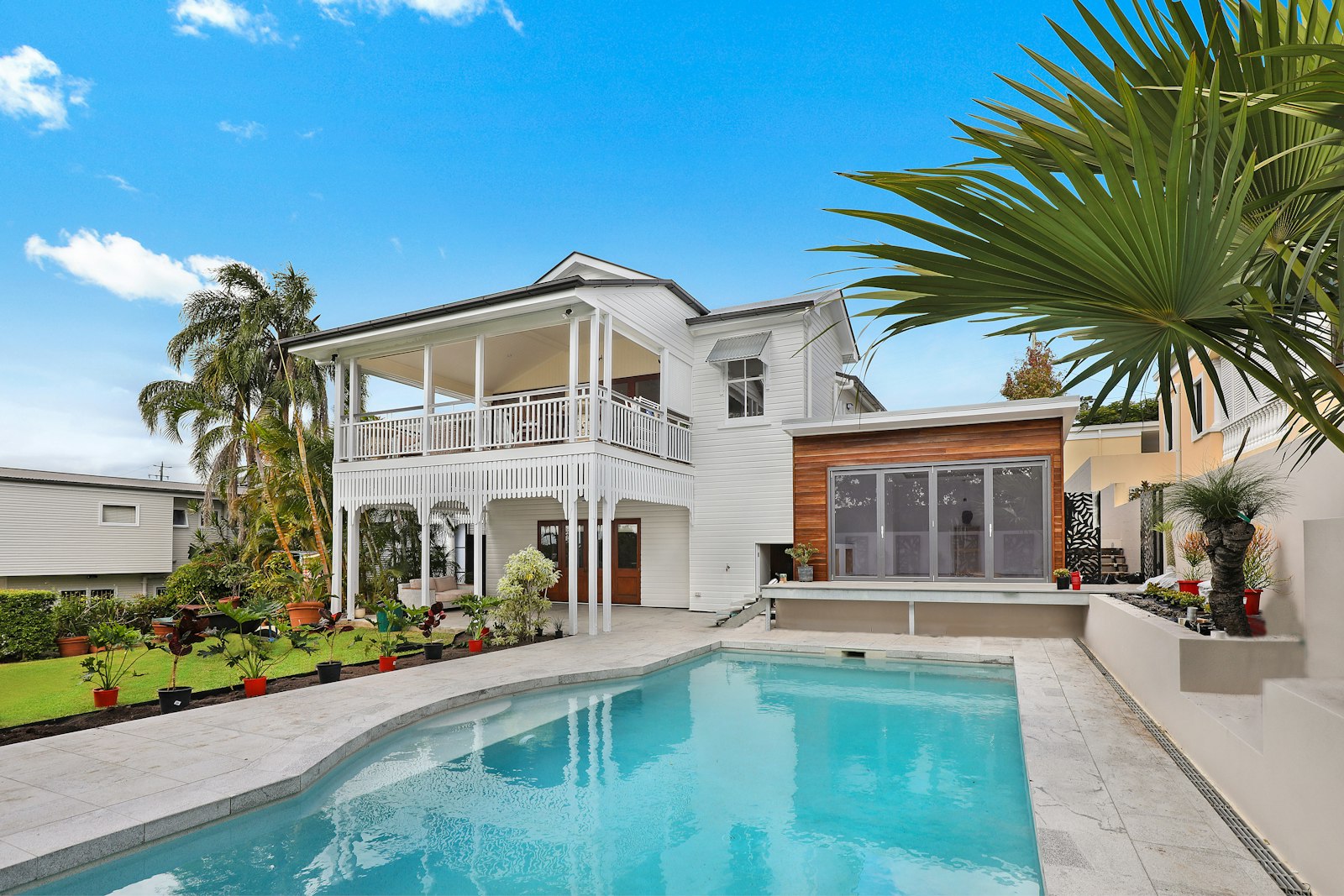
An Automated Valuation Model (AVM) estimates a home's market value using statistical methods rather than a human appraiser visiting the property. Every major real estate platform runs one, lenders use them for refinance and home equity decisions, and our iBuyer pipeline depends on one for initial offers. Understanding how they work — and how they fail — is essential.
The data layer
Every AVM starts with three categories of data:
- Property records (county assessor): square footage, bedrooms, bathrooms, lot size, year built, last sale price and date.
- Recent sales (MLS closed sales): the comparable transactions used as the model's anchor.
- Geographic / neighborhood signals: census tract, school district, distance to amenities, walkability, crime indices.
Quality varies dramatically by source. Some county assessors update annually with strong field verification; others rely on owner self-report and have not been re-walked in 20 years. A model is only as accurate as the dirtiest field in its training set.
The modeling approach
Three families of methods dominate:
- Hedonic regression: a linear or generalized linear model regressing price on a vector of features (sqft, beds, location dummies, recency, etc.). Easy to interpret, weak at capturing nonlinearity.
- Spatial models: weight nearby comparables more heavily, often via kriging or spatial autocorrelation. Critical for picking up neighborhood effects regression alone misses.
- Gradient boosted trees and ensembles: XGBoost, LightGBM, or stacked ensembles that capture interactions and nonlinearity. Most modern AVMs (including Zillow's, post-2021 redesign) lean here.
A serious production AVM is rarely one model — it is an ensemble that picks per-property which sub-model is most reliable based on data density and feature coverage.
Confidence intervals matter more than point estimates
A well-built AVM publishes a confidence range. Ours, like Zillow's and Redfin's, reports a Forecast Standard Deviation (FSD) — roughly the typical percentage error. National FSD for the major platforms typically lands at 2-5% for on-market homes and 6-12% for off-market.
A house with FSD 3% and an estimate of $500,000 means the true value is likely within $485,000-$515,000. A house with FSD 12% and the same estimate could reasonably trade anywhere from $440,000-$560,000 — that is not a "valuation," that is a "vague suggestion."
Where AVMs fail
The systematic failure modes:
- Unique properties — custom architecture, very large lots, waterfront, unusual layouts. The model has no comparables.
- Rapidly changing markets — when prices move 15% in a quarter, training data lags reality.
- Renovated interiors — county records say "1965 ranch, 1500 sqft." MLS photos show a $200K renovation. Models see the bones, not the kitchen.
- Low-volume neighborhoods — fewer than 5-10 comparable sales in the past year produces a model that is essentially extrapolating.
- Distressed sales — REO, short sales, and probate transactions can poison the training set if not flagged.
How we use AVM in our iBuyer pipeline
For an iBuyer initial offer, we run three internal AVMs (hedonic, spatial, GBT ensemble) plus an external second-opinion AVM. We discount the model output by an FSD-weighted risk premium and add explicit deductions for any flag the seller's disclosure raises. Final offers always involve a human inspection — the AVM is the entry gate, not the verdict.
For consumers
If you are pricing your own home, treat any free Zestimate-style number as a *starting point for a CMA* — never as the answer. Pull 5-8 closed comparables in the past 6 months within a half-mile, adjust for square footage, condition, and lot, and let your listing agent walk you through the spread. The AVM is one input among many.